Day & Night Emergency Calls
Weekends and major holidays included.
Cambridge · Alpharetta, Georgia
Emergency extraction and structural drying for multi-level single-family homes in Cambridge, Alpharetta — including upper-level bathroom plumbing, attic and roof intrusion, and migration between floors. Triple Master crews document drying progress across multiple visits for occupied homes and authorized insurance representatives.
In a multi-level home, an upper bathroom loss can show up two floors below as a stain with no obvious source. Ceiling and wall assemblies between floors hold moisture until mapping defines where drying equipment belongs — not where the water first pooled.
Cambridge is a residential community in Alpharetta where multi-level single-family homes, attic spaces, and upper-level bathroom plumbing create distinct water migration paths. Properties range from two-story plans with hardwood and drywall assemblies to homes with roof and attic systems vulnerable to storm intrusion.
Migration between floors
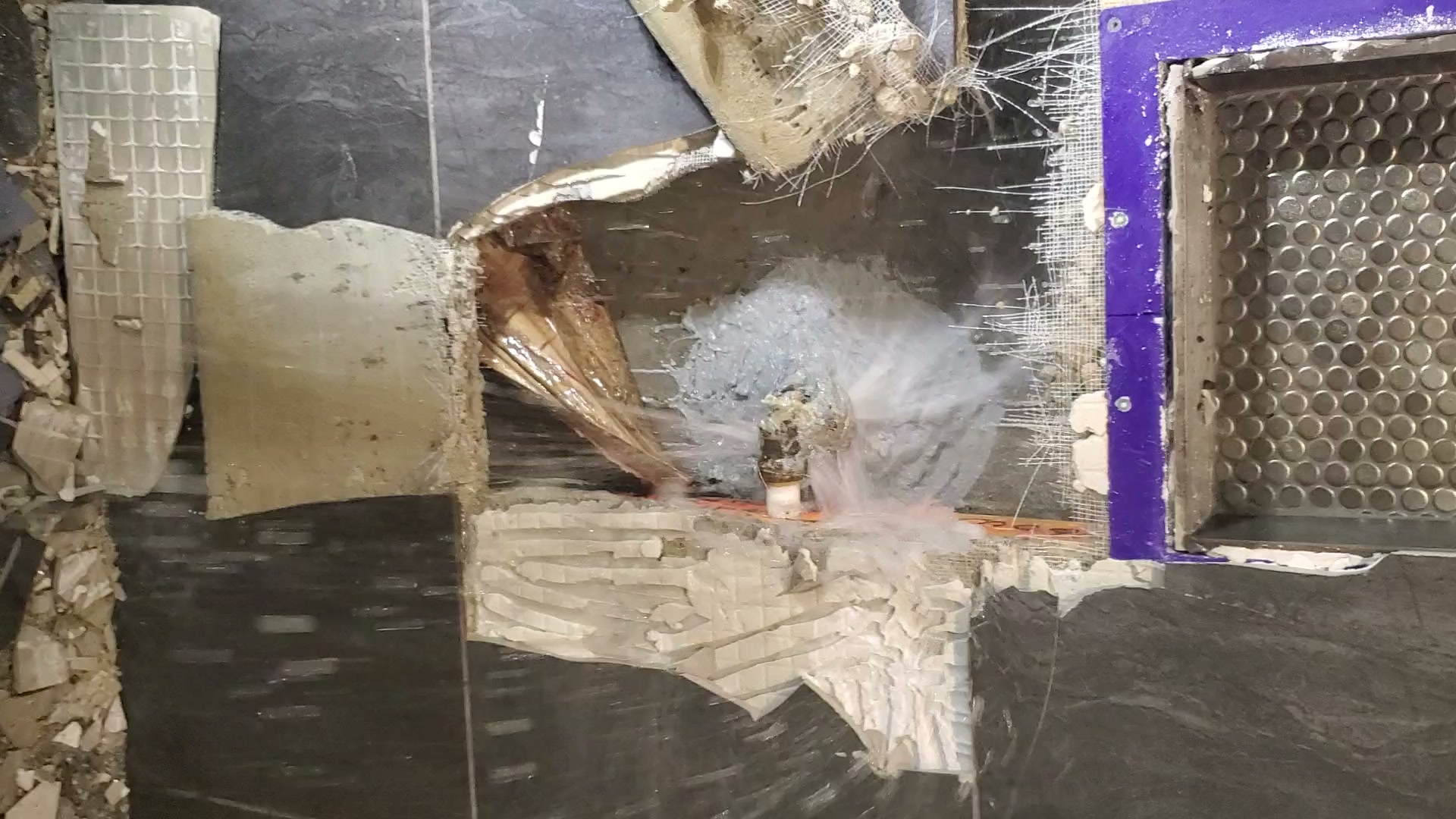
Upper-level bathroom and supply-line failures can send water through ceiling and wall assemblies into rooms below. Attic and roof intrusion can saturate insulation and framing before stains appear on ceiling drywall.
Occupied-home planning
Family-occupied homes require drying plans that account for daily living areas, multiple monitoring visits, and documented progress readings. Grady does not imply affiliation with any school or institution — Cambridge refers to the residential community name only.
Loss Evaluation
Each scenario below changes how Grady inspects, extracts, and dries — because floor level, assembly type, and migration path differ home to home.
Upper-level bathroom losses
Toilet, shower, and supply-line failures on upper floors can migrate into ceiling and wall assemblies below. Mapping defines which rooms and levels require drying equipment before finishes are removed.
Attic and roof intrusion
Roof and flashing failures can introduce water into attic insulation and ceiling framing. Thermal imaging locates affected assemblies before drywall is disturbed.
Floor-to-floor migration
Water can travel along plumbing chases and floor systems between levels. Inspection includes rooms above and below the source even when surface damage appears limited.
Hardwood and subfloor saturation
Water wicks into hardwood and engineered planks and can reach subfloor systems. Grady evaluates salvage potential based on category of water, exposure time, and meter readings.
Drywall and insulation in wall cavities
Elevated moisture in wall cavities and insulation may not be visible at the surface. Moisture meters define the drying boundary before equipment placement.
Ceiling assembly damage
Ceiling drywall, texture, and insulation below upper-level plumbing can hold moisture after a release. Daily readings track progress across multiple drying visits in occupied homes.
Restoration decisions depend on how each assembly between floors absorbs moisture — attic insulation, ceiling drywall, and subfloor systems each behave differently.
Residential assemblies
Multi-level homes in Cambridge use assemblies that wick moisture differently — see how Grady evaluates residential water damage restoration by material type.
North Fulton commercial context
Cambridge is primarily residential — for commercial water losses in adjacent Alpharetta corridors, see commercial water damage restoration.
Documented Process
Each dispatch follows the same documented sequence — adapted for multi-level homes, occupied-family scheduling, and multi-visit documentation in Cambridge. Our emergency response and documentation process is used day and night, including weekends and major holidays.
Loss details, access, and occupancy conditions are captured. Category and scope are assessed before equipment is placed.
Meters and thermal imaging locate affected assemblies, including concealed cavities in crawlspaces, wall cavities, and multi-level floor systems.
Standing water is removed from floors, carpet pad, and accessible cavities before structural drying begins.
Air movers and dehumidifiers are placed per the moisture map. Daily readings verify progress toward dry standard.
Affected materials are evaluated based on category, exposure time, and readings; salvage when drying data supports it.
Final readings, photos, and drying logs are compiled. Equipment is removed when affected materials meet established goals.
Grady documents conditions and work performed across each monitoring visit so homeowners and authorized insurance representatives can track drying progress in occupied homes. When authorized, we organize and share relevant project documentation. Coverage decisions remain with the insurer — Grady does not determine coverage or guarantee claim payment.
Documentation supports transparency during structural drying. It does not guarantee insurance coverage or policy outcomes.
Example loss scenario
In a multi-level home, an upper bathroom release can migrate into ceiling and wall assemblies on the floor below long before the full extent is visible in the source room.
Grady's sequence typically includes: isolating the source when safe, mapping moisture in the bathroom, adjoining rooms, and ceiling assemblies below, extracting standing water, placing drying equipment per the map, and documenting daily readings across multiple visits until affected materials meet established drying goals.
This is an educational field scenario — not a report of a specific customer property, address, or outcome. Grady does not imply affiliation with any school or institution.
Cambridge is one community within Grady's Alpharetta service area. For city-wide coverage, related services, and additional community guides, start with the parent hub.
Alpharetta Water Damage RestorationOther Alpharetta community guides:
Yes. Grady provides emergency water damage restoration for multi-level single-family homes in Cambridge, Alpharetta, including properties with upper-level bathroom plumbing and attic assemblies.
Yes. Water from upper-level bathroom failures can migrate into ceiling and wall assemblies on lower floors. Grady maps affected assemblies before drying equipment is placed.
Grady logs moisture readings, equipment placement, and progress photographs at each monitoring visit. When authorized, documentation is shared with homeowners and insurance representatives.
Grady documents initial conditions, affected materials, moisture readings, equipment placement, drying progress, and completion review with photographs and logs. Grady does not determine coverage or guarantee claim payment.
Yes. Roof failures can saturate attic insulation and framing before stains appear on ceiling drywall. Thermal imaging locates affected assemblies before finishes are disturbed.
Elevated moisture in building materials beyond 24 to 48 hours increases mold risk. Fast extraction, verified structural drying, and moisture mapping reduce secondary damage. Grady can coordinate mold evaluation when moisture remains elevated.
Multi-level home — emergency calls answered day and night, including major holidays, across Alpharetta and Fulton County.