Day & Night Emergency Calls
Weekends, holidays, and overnight losses answered across Fulton County.
Weather Advisory — Fulton County
Call 800-773-165824/7 emergency extraction and drying for Johns Creek and Fulton County. IICRC Triple Master crews with moisture meters and drying equipment loaded at dispatch.
Johns Creek homes — many built in the 1990s — hide moisture in slab assemblies and utility closets long before you see standing water. We treat each call as building science, not surface cleaning.
From Technology Park along State Bridge Road to St. Ives and Country Club of the South, Johns Creek properties share 1990s slab foundations, aging water heaters, and tree-lined roof lines that fail under microburst wind.
Johns Creek homes span slab-on-grade subdivisions from the 1990s, estate properties with complex roof and landscape drainage, and commercial buildings in Technology Park with sprinkler and HVAC assemblies.
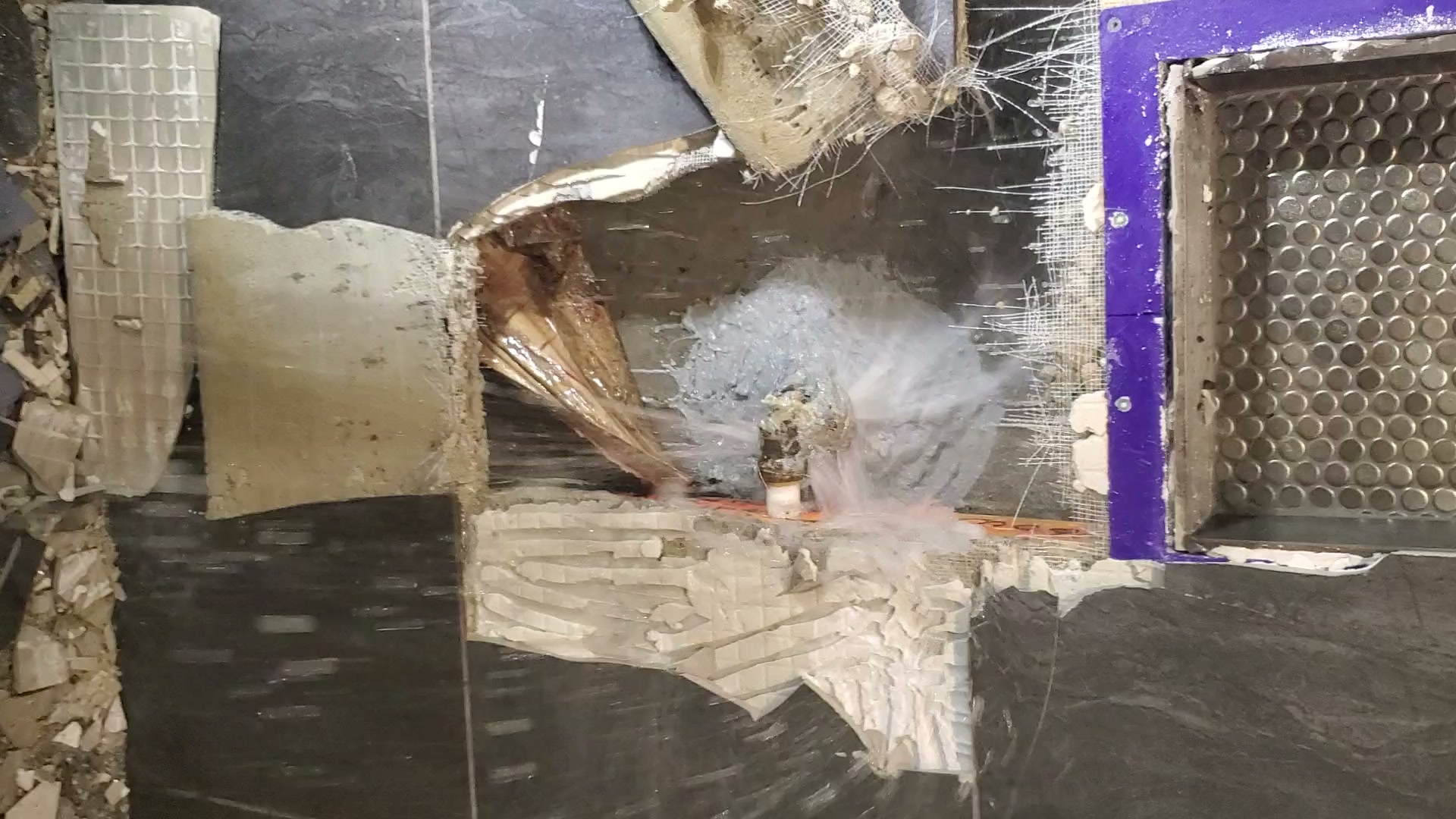
Slab leak moisture travels under flooring long before standing water appears. Utility closets, wall cavities, and subfloor assemblies require moisture mapping — not assumptions based on visible damage alone.
Common calls include slab leak detection and hardwood flooring damage, water heater failures in utility closets, ice dam roof leaks along Medlock Bridge Road, sprinkler discharge in Technology Park offices, and sewer backup during heavy rain near Autrey Mill.
Country Club of the South estate homes see complex roof and landscape drainage issues. St. Ives golf community properties have slab and HVAC vulnerabilities. Seven Oaks subdivisions report aging water heater failures. Rivermont streets near Autrey Mill Nature Preserve and Chartwell crawlspace homes each require different drying strategies.
Grady documents every Johns Creek loss for Fulton County insurance review with photos, moisture readings, and drying logs. Also serving Alpharetta, Roswell, and Cumming. Contaminated losses: Sewage Cleanup.
Moisture Science
Standing water is only the first visible sign. These four stages define how Grady assesses and stabilizes a Johns Creek water loss before structural drying begins.
Stage 01
Water spreads across flooring, wicks into drywall, and travels along slab edges and subfloor assemblies. In Johns Creek's 1990s slab homes, moisture can migrate under hardwood and tile long before it appears on the surface.
Stage 02
Moisture meters and thermal imaging locate affected assemblies behind finishes. Mapping defines which materials are wet, how far moisture traveled, and where drying equipment must be placed — before demolition decisions are made.
Stage 03
Standing water is extracted from floors, carpet pad, and cavities. Category assessment determines whether standard or contaminated-water protocols apply. Stabilization limits further spread while drying goals are established.
Stage 04
Air movers and dehumidifiers are placed per the moisture map. Daily readings verify progress until affected materials reach industry dry standard — not when surfaces simply look dry.
Documented Process
Every Johns Creek dispatch follows the same documented sequence — from emergency call through verified dry-out.
Loss details captured. Category and scope assessed. Dispatch initiated from North Georgia.
Crew arrives with extraction and drying equipment. Moisture mapping identifies affected assemblies.
Standing water removed from floors, cavities, and carpet pad before structural drying begins.
Air movers and dehumidifiers placed per moisture map and established drying goals for each material.
Moisture readings logged each visit. Photos and drying logs captured for insurance documentation.
Final meter readings confirm dry standard before equipment is removed from site.
See the full restoration process on our Water Damage Restoration page
Field Education
Educational field examples illustrating how common Fulton County loss types are evaluated — not reports of specific customer properties, addresses, or outcomes.
Material Assessment
Each material absorbs and releases moisture differently. Grady evaluates salvageability based on category of water, exposure time, and meter readings — not assumptions.
Cupping and buckling appear when subfloor moisture remains elevated. Controlled drying and subfloor monitoring determine whether boards can be salvaged or require replacement — common after Johns Creek slab leaks.
Pad holds moisture longer than carpet face fiber. Category assessment and dry time determine whether pad is removed or whether in-place drying is appropriate.
Wicking raises moisture in wall cavities above the visible water line. Insulation compacts when wet and often requires removal to reach dry standard in framing.
Toe-kicks and particleboard substrates trap moisture. Specialty drying can reduce demolition when swelling has not compromised structural integrity.
OSB and plywood subfloor absorb water from above and below. Readings at multiple depths define whether drying is sufficient or whether affected sections require replacement.
Slab-on-grade foundations common in 1990s Johns Creek subdivisions trap moisture under flooring. Chartwell and select neighborhoods with vented crawlspaces require separate drying strategies from slab assemblies.
Grady responds throughout Johns Creek and Fulton County — from Technology Park commercial properties to residential neighborhoods along Medlock Bridge and State Bridge roads. Verified communities below are the next geographic level beneath this city hub; local guides roll out as pages are approved.
Estate homes with complex roof and landscape drainage.
Local guide in development
Golf community properties with slab and HVAC vulnerabilities.
Local guide in development
Established subdivisions with aging water heaters.
Local guide in development
Residential streets near Autrey Mill Nature Preserve.
Local guide in development
Single-family homes with crawlspace moisture risk.
Local guide in development
Medlock Bridge Road corridor residential and commercial properties.
Local guide in development
State Bridge Road commercial and residential corridor.
Local guide in development
Technology Park Johns Creek office and commercial properties.
Local guide in development
Named in service data — local place-name verification in progress.
Verification in progress
Community boundaries verification in progress.
Verification in progress
Micro-local URLs remain withheld until pages are live — see the map section for rollout status.
Grady serves homeowners and businesses throughout Johns Creek, Fulton County, and nearby communities across North Fulton.
While You Wait
These steps help limit further damage and keep your household safe before Grady arrives in Johns Creek.
Grady dispatches Triple Master crews across Johns Creek via SR-141, Medlock Bridge Road, and State Bridge Road corridors with extraction and drying equipment ready to deploy. Emergency calls are answered day and night, including weekends and major holidays. Losses are prioritized as conditions allow, and response planning begins when your call is received.
Yes. Slab leak detection calls are common in Johns Creek's 1990s-era builds. Grady maps moisture in flooring assemblies, documents conditions for insurance review, and dries affected materials to industry standard.
Frequent calls include water heater tank failures, ice dam roof leaks, sprinkler head activations, and sewer backup during heavy rain — especially in Country Club of the South, St. Ives, and Seven Oaks.
Yes. Grady documents water damage for carriers common in Johns Creek including State Farm, USAA, Allstate, Liberty Mutual, and Farmers — with moisture logs, photos, and drying records throughout the loss.
Yes. Grady responds throughout Johns Creek including communities near Emory Johns Creek Hospital, Newtown Park, and Technology Park Johns Creek.
Slab leak, water heater, or storm damage — call now for Fulton County dispatch.