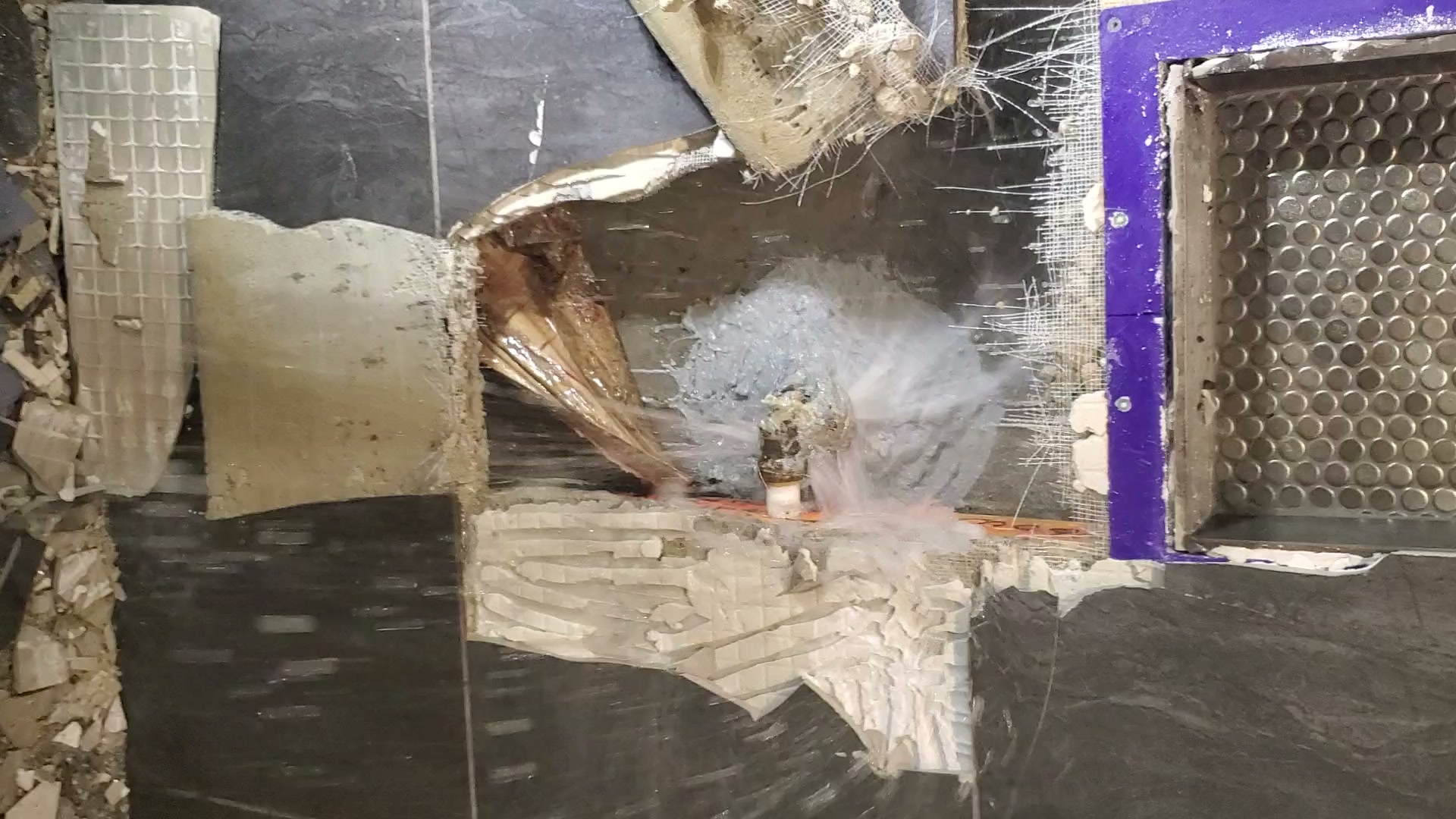
Day & Night Emergency Calls
Weekends and major holidays included.
North Point · Roswell, Georgia
Emergency extraction and structural drying for commercial and residential properties near the Holcomb Bridge Road and Mansell Road corridor in North Point — fire suppression water releases, burst pipes, water heater failures, sewage backups, and appliance supply-line leaks in occupied tenant spaces. Triple Master crews document affected materials from the first walkthrough for owners, tenants, and authorized insurance representatives. Grady is an independent restoration company and is not affiliated with North Point Mall or its management.
Near the Holcomb Bridge and Mansell corridor, a fire suppression activation or supply-line break in an occupied tenant space spreads across finished interiors before property management has a full picture of affected suites. Documented intake and moisture mapping define the scope — not the size of the building footprint.
North Point is the commercial and residential area near the Holcomb Bridge Road and Mansell Road corridor in Roswell, anchored by the North Point landmark and Roswell Area Park in the broader city context. Fire suppression water damage in commercial tenant spaces, burst supply lines, water heater failures, sewage backups, and appliance releases affect occupied retail, office, and nearby residential properties — Grady is an independent restoration company and is not affiliated with North Point Mall or its management.
Commercial suppression and pipe breaks in tenant spaces
Fire suppression activations and supply-line failures in occupied commercial tenant spaces can spread quickly across carpet tile, drop ceilings, and finished retail interiors. Category assessment and containment planning precede wide-area extraction before tenants return to affected suites.
Residential properties near the corridor
Residential properties along Holcomb Bridge Road and Mansell Road share the corridor with commercial edges but use different assemblies — burst pipes, water heater releases, and sewage backups in homes require residential drying plans distinct from tenant-space containment protocols.
Loss Evaluation
Each scenario below changes how Grady inspects, extracts, and dries — because occupancy, assembly type, and property use differ along the corridor.
Fire suppression water in occupied tenant spaces
Sprinkler activations and suppression system releases can spread across large floor plates with finished commercial interiors. Category assessment, containment planning, and documented intake precede extraction before tenants reoccupy affected suites.
Commercial pipe breaks in tenant spaces
Supply and process line failures in retail, office, and service tenant spaces can spread across slab and finished interior assemblies. Moisture mapping defines which drop ceilings, demising walls, and floor finishes require drying or removal.
Burst pipes and supply-line releases
Kitchen, bathroom, and utility supply lines in nearby residential properties can fail at fittings and send water into cabinetry, wall cavities, and subfloor decking. Category assessment precedes structural drying in corridor-area homes.
Water heater failures
Tank ruptures in utility closets, mechanical rooms, and commercial utility areas can saturate adjacent rooms and floor systems. Extraction and drying plans account for occupancy and assembly type in each affected space.
Sewage backups and drain failures
Drain and sewer line failures can introduce Category 3 water into bathrooms, break rooms, and lower-level spaces in both commercial and residential properties. Containment planning precedes extraction.
Sudden interior flooding from plumbing failures
Catastrophic supply-line or fixture failures can spread quickly across open floor plans in residential properties and large commercial floor plates. Wide-area extraction and documented moisture mapping precede equipment placement.
Restoration decisions depend on how each assembly absorbs moisture — commercial tenant finishes, suppression system discharge paths, and residential subfloor systems each behave differently along the corridor.
Residential assemblies
Residential properties near the Holcomb Bridge and Mansell corridor use assemblies that wick moisture differently — see how Grady evaluates residential water damage restoration by material type.
Commercial assemblies
Retail, office, and service tenant spaces along the corridor require different containment plans — learn how commercial water damage restoration addresses occupied commercial properties near North Point.
Documented Process
Each dispatch follows the same documented sequence — adapted for commercial tenant spaces, fire suppression releases, and corridor residential properties in North Point. Our emergency response and documentation process is used day and night, including weekends and major holidays.
Loss details, access, and occupancy conditions are captured. Category and scope are assessed before equipment is placed.
Meters and thermal imaging locate affected assemblies, including concealed cavities in crawlspaces, wall cavities, and multi-level floor systems.
Standing water is removed from floors, carpet pad, and accessible cavities before structural drying begins.
Air movers and dehumidifiers are placed per the moisture map. Daily readings verify progress toward dry standard.
Affected materials are evaluated based on category, exposure time, and readings; salvage when drying data supports it.
Final readings, photos, and drying logs are compiled. Equipment is removed when affected materials meet established goals.
Grady documents conditions and work performed so property owners, tenants, facility teams, and authorized insurance representatives can make informed decisions during structural drying. When authorized, we organize and share relevant project documentation with photographs, moisture logs, and equipment records. Coverage decisions remain with the insurer — Grady does not determine coverage or guarantee claim payment.
Documentation supports transparency during structural drying. It does not guarantee insurance coverage or policy outcomes.
How We Evaluate This Type of Loss
In a commercial tenant space near the Holcomb Bridge and Mansell corridor, a fire suppression activation or supply-line break can spread across carpet tile, drop ceilings, and finished retail or office interiors before the full extent is visible from the entry point.
Grady's sequence typically includes: isolating the source when safe, assessing category of water, mapping moisture in affected tenant areas, drop ceiling plenums, and adjoining demising assemblies, planning containment when needed, extracting standing water, placing drying equipment per the map, and documenting readings until affected materials meet established drying goals. Occupied suites may require phased equipment placement and coordination with property management.
This is an educational field scenario — not a report of a specific customer property, address, or outcome.
North Point is one community within Grady's Roswell service area. For city-wide coverage, related services, and additional community guides, start with the parent hub.
Roswell Water Damage RestorationOther Roswell community guides:
Yes. Grady provides emergency water damage restoration for commercial and residential properties near the Holcomb Bridge and Mansell corridor in North Point, Roswell, in Fulton County. Grady is not affiliated with North Point Mall or its management.
Grady assesses category of water, plans containment when needed, and documents affected materials before extraction. Suppression releases in finished commercial interiors require documented intake and moisture mapping before wide-area drying begins.
Yes. Supply-line failures can migrate through demising walls, drop ceiling plenums, and corridor transitions into adjoining suites. Grady maps affected assemblies across tenant boundaries before placing drying equipment.
Grady documents initial conditions, affected materials, moisture readings, equipment placement, drying progress, and completion review with photographs and logs. When authorized, documentation is shared with property owners, tenants, and insurance representatives. Grady does not determine coverage or guarantee claim payment.
Yes. Burst pipes, water heater failures, sewage backups, and appliance supply-line releases in corridor-area homes follow residential drying protocols distinct from commercial tenant containment plans.
Elevated moisture in building materials beyond 24 to 48 hours increases mold risk. Fast extraction, verified structural drying, and moisture mapping reduce secondary damage. Grady can coordinate mold evaluation when moisture remains elevated after drying goals are established.
Commercial tenant space or corridor-area home — emergency calls answered day and night, including major holidays, across Roswell and Fulton County.